
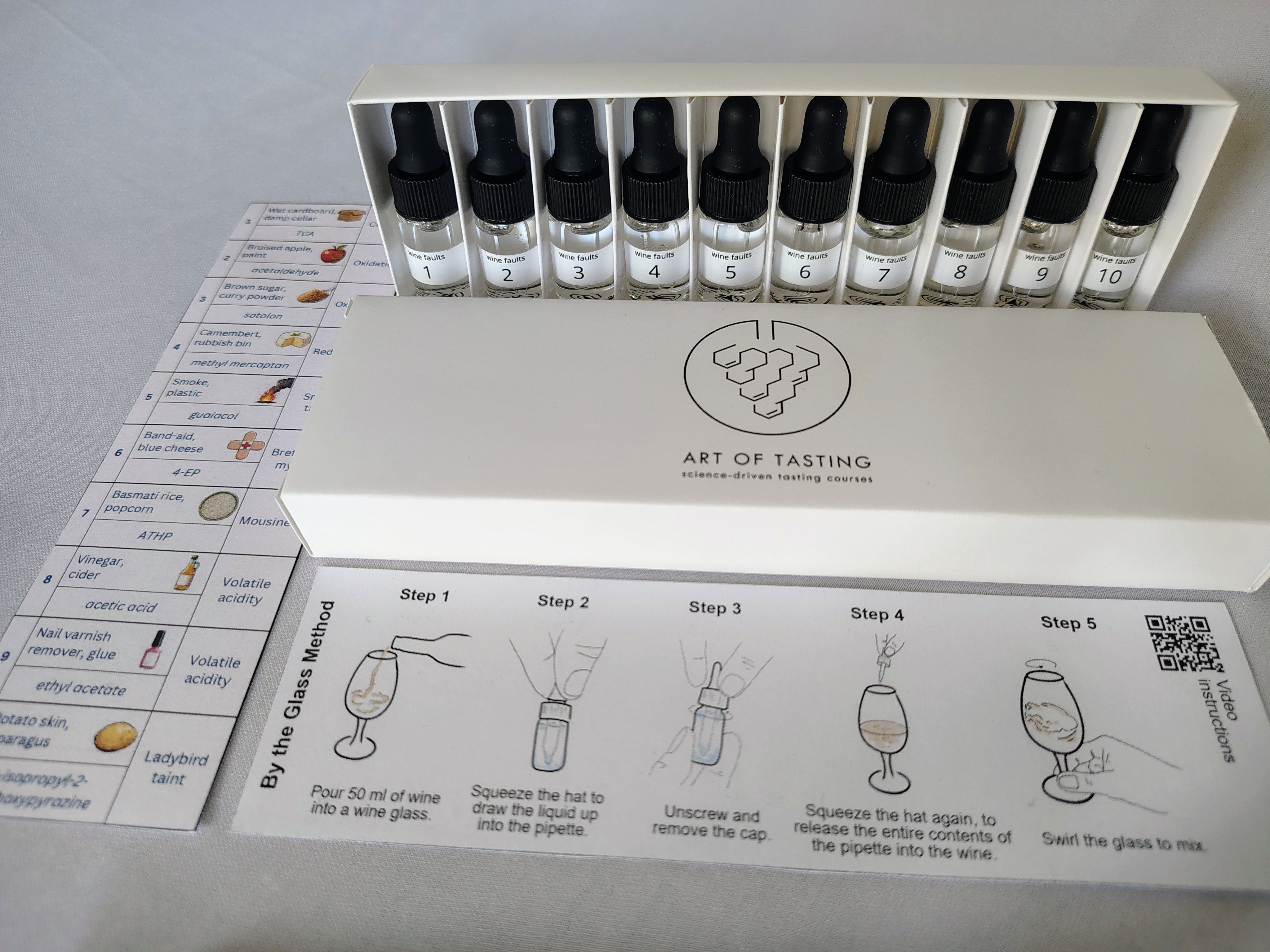
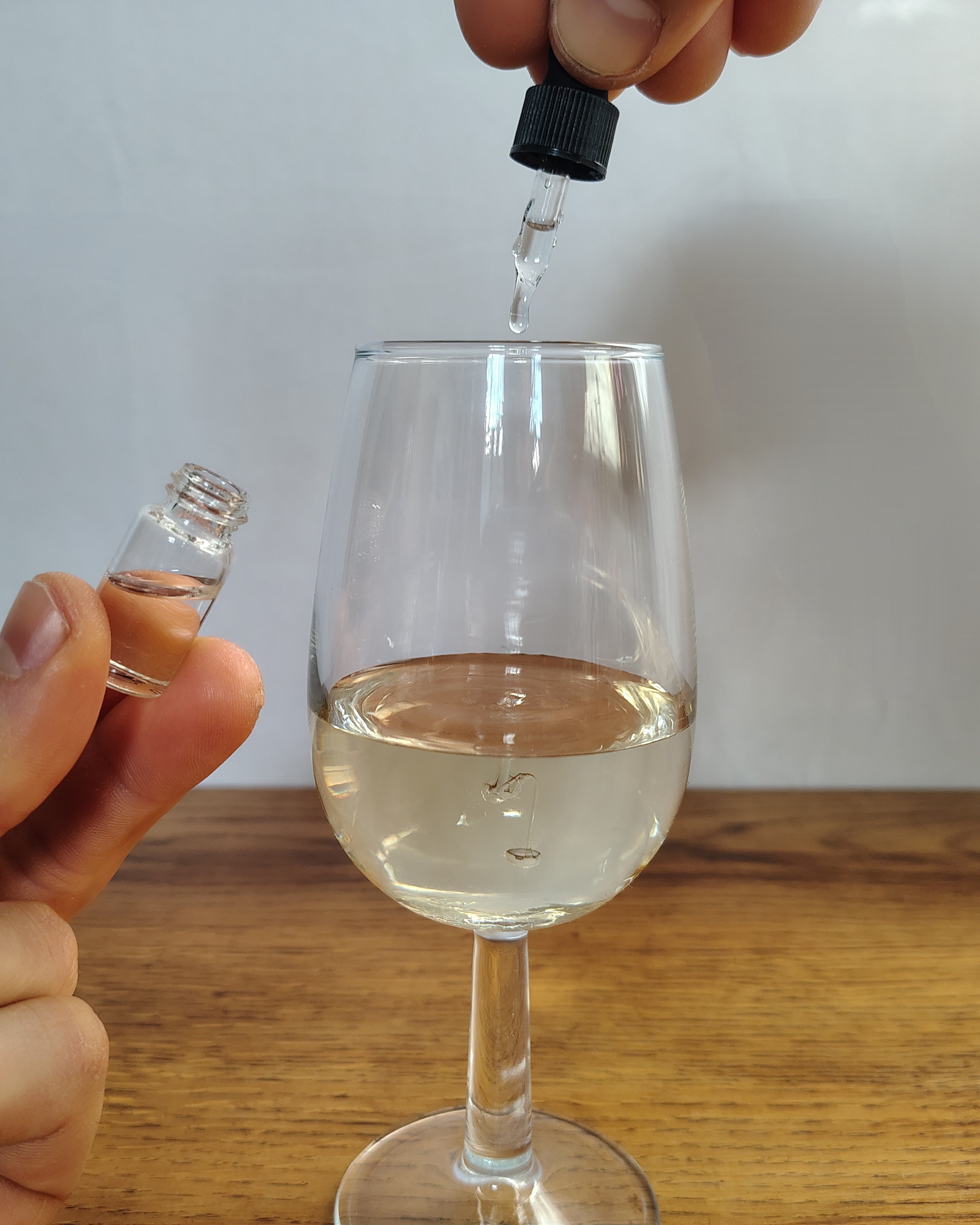

Flavouring vials are a learning tool, enabling you to practice identifying wine aromas and wine faults one-by-one. The vials contain flavour compounds, which you can add to your own base wine, to produce samples for practising.
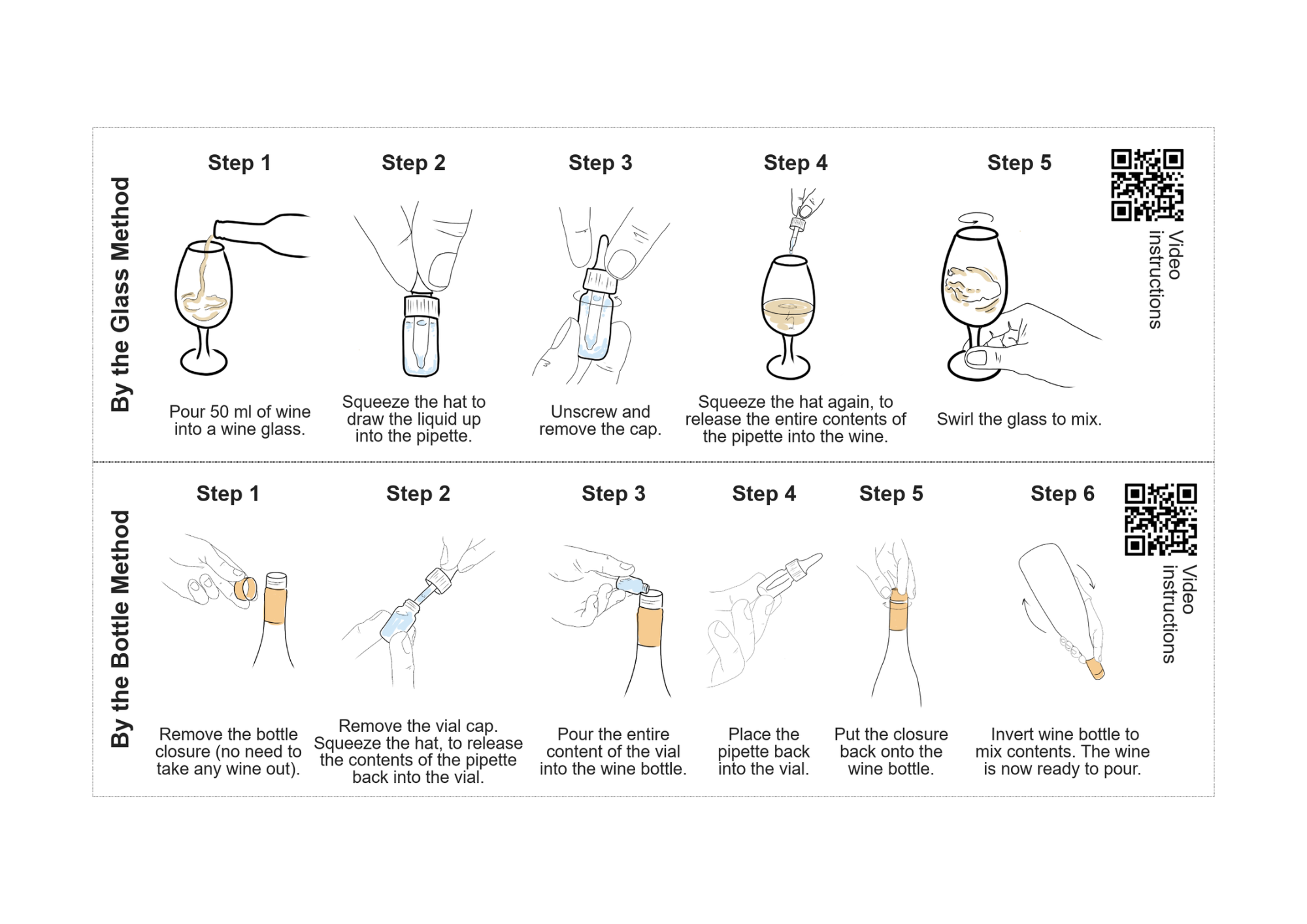
A vial can be used in two ways:
- By the Glass: use the built-in pipette to add the compound to a 50 ml wine sample. A single vial provides enough for up to 15 additions. Great for personal training sessions.
- By the Bottle: add the entire content of the vial to a 750 ml wine bottle. Great for using in a study group.
After addition of the compound, smell and taste the wine sample. Try comparing it with a second wine sample without the addition. Experiencing the difference side-by-side helps you to better understand the aroma and identify it in wine.
There are three versions of the kit:
- Molecules of white wine: learn petrol, butter, passion fruit and more. Recommended for Level 3 and Level 4 students preparing for tasting exams.
- Molecules of red wine: learn black pepper, eucalyptus, violet and more. Recommended for Level 3 and Level 4 students preparing for tasting exams.
- Wine faults: learn to recognise cork taint, Brett, volatile acidity. and others. Recommended for Level 4 students and graduates.
Full aroma and fault list below. Tip: Avoid looking in advance - blind tasting delivers the best training results.
About the vials:
1
3-isobutyl-2-methoxypyrazine
Green bell pepper, tomato leaves
Sauvignon Blanc
2
4-MMP
Passion fruit, elderflower
Sauvignon Blanc
3
geraniol
Rose, bergamot
Muscat
4
rose oxide
Lychee, Turkish delight
Gewürztraminer
5
benzyl mercaptan
Flint, matchstick
Protective winemaking
6
ethyl hexanoate
Artificial pineapple, aniseed
Low temperature fermentation
7
diacetyl
Butter, yoghurt
Malolactic fermentation
8
vanillin
Vanilla, custard
Oak
9
eugenol
Cloves, nutmeg
Oak
10
TDN
Petrol, rubber
Riesling
11
methyl anthranilate
Grape jelly, bubblegum
Fox grape
12
linalool
Bergamot, lavender
Muscat
1
3-isobutyl-2-methoxypyrazine
Green bell pepper, tomato leaves
Cabernet Sauvignon
2
isoamyl acetate
Banana, bubblegum
Carbonic maceration
3
β-ionone
Violet, raspberry
Colour pigment degradation
4
eucalyptol
Eucalyptus, bay leaf
Eucalyptus trees
5
rotundone
Black pepper, sandalwood
Syrah
6
tartaric acid
Acidic, sour
Grape pulp
7
vanillin
Vanilla, custard
Oak
8
whisky lactone
Coconut, dill
Oak - American
9
2,3,5-trimethylpyrazine
Chocolate, cacao
Oak
10
4-EG
Leather, smoky
Bottle ageing/Brett
11
ethyl cinnamate
Kirsch, bubblegum
Carbonic maceration
12
β-damascenone
Blackcurrant, black tea
Colour pigment degradation
1
TCA
Wet cardboard, damp cellar
Cork taint
2
acetaldehyde
Bruised apple, paint
Oxidation
3
sotolon
Brown sugar, curry powder
Oxidation
4
methyl mercaptan
Cabbage, camembert
Reduction
5
guaiacol
Smoke, olives
Smoke taint
6
4-EP
Band-aid, blue cheese
Brettanomyces
7
ATHP
Popcorn, sweat
Mousiness
8
acetic acid
Vinegar, pickles
Volatile acidity
9
ethyl acetate
Nail varnish remover, glue
Volatile acidity
10
3-isopropyl-2-methoxypyrazine
Potato skin, asparagus
Ladybird taint
11
isovaleric acid
Vomit, sweaty socks
Brettanomyces
12
cis-3-hexenol
Green banana, grass
Underripe grapes