Join our newsletter

Get monthly updates on new courses and products.

By subscribing you agree to with our Privacy Policy and provide consent to receive updates from our company.
Thank you! Your submission has been received!
Oops! Something went wrong while submitting the form.

Invite Sietze for
a Tasting course
Black and white halftone rose illustration with varying dot sizes forming petals and leaves.
Man with mustache wearing vest and patterned shirt holding a glass of red wine and smiling.
Abstract dotted molecular structure with interconnected circular nodes on a transparent background.

A live course at your location

What participants will experience
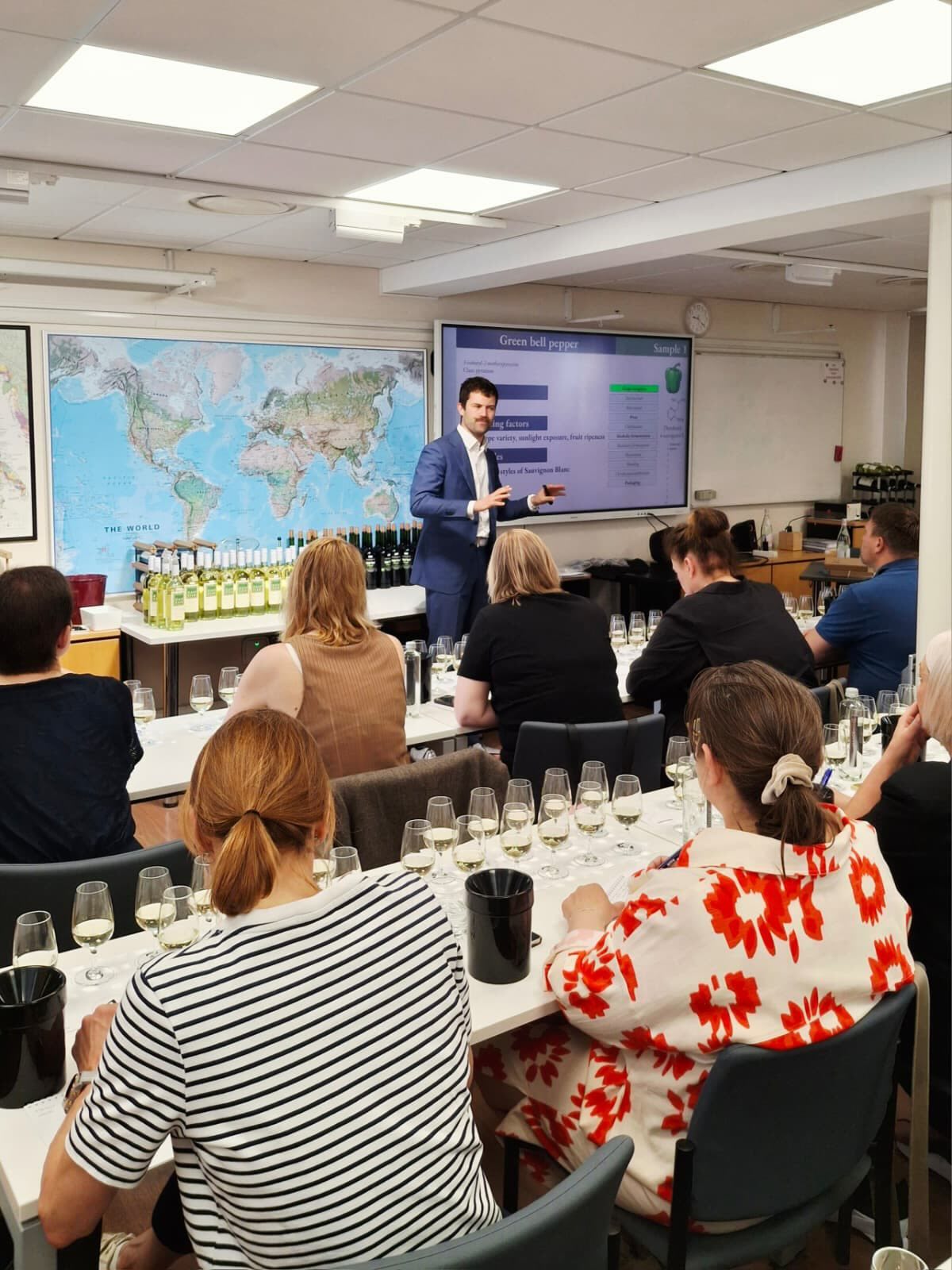
Each session, participants taste 11 glasses of the same base wine. Ten glasses each contain a single flavour compound, while one glass serves as an unchanged reference wine.

Each flavour is accompanied by an explanation of its origins during viticulture or winemaking. Participants then put their skills to the test in a blind tasting exercise before finishing with a blending activity, recreating common wine styles.

Participants receive a certificate of attendance upon completion of the course.

Who is this course for
Wine students, sommeliers, winemakers, other wine professionals (retailers, importers, educators)


Course fee
€2,100 (excluding VAT) for up to 30 participants. This covers the flavour compounds, as well as Sietze Wijma’s preparation and teaching. The fee is paid by the host. The host sets the ticket price for participants. Recent examples include: London - £210, Atlanta - $490, Athens - €300.

Host requirements (not covered in course fee)
Venue
Classroom with projector.
Wine

- 44 bottles of a neutral white wine, e.g. Veneto Pinot Grigio.
- 22 bottles of a neutral red wine, e.g. Chilean Merlot.
- Four wines of different styles. 2 bottles of each wine, totalling 8 bottles. Examples: Gewürztraminer, Rioja
Glassware
11 glasses per participant are required. Glasses do not need replacement between sessions.
Other items
Pens, drinking water and spittoons.
Printing
The host prints a course handout, placemats, tasting forms and certificates.


Our teaching method

We add aroma compounds to wine, to create benchmark teaching samples.

During our courses, you will taste 11 glasses of the same neutral wine. 1 of those is kept unchanged as a reference, the remaining 10 each have a single aroma compound added.

This allows practicing identification of common wine aromas and faults one by one.
Wine glass tilted, filled with red wine against a black background.
Neutral wine
Halftone style black wine glass tilted with two lychee fruits and leaves next to it.Halftone style black wine glass tilted with two lychee fruits and leaves next to it.
1
/
1
Neutral wine

+ one compound of Lychee

Course programme

White Wine Flavours

09:00 - 11:00

View flavours:

#
Compound
Descriptors
Origin
1
3-isobutyl-2-methoxypyrazine
Green bell pepper, tomato leaves
Sauvignon Blanc
2
4-MMP
Passion fruit, elderflower
Sauvignon Blanc
3
geraniol
Rose, bergamot
Muscat
4
rose oxide
Lychee, Turkish delight
Gewürztraminer
5
benzyl mercaptan
Flint, matchstick
Protective winemaking
6
ethyl hexanoate
Artificial pineapple, aniseed
Low temperature fermentation
7
diacetyl
Butter, yoghurt
Malolactic fermentation
8
vanillin
Vanilla, custard
Oak
9
eugenol
Cloves, nutmeg
Oak
10
TDN
Petrol, rubber
Riesling

Wine Faults

10:30 - 13:30

View flavours:

#
Compound
Descriptors
Origin
1
TCA
Wet cardboard, damp cellar
Cork taint
2
acetaldehyde
Bruised apple, paint
Oxidation
3
sotolon
Brown sugar, curry powder
Oxidation
4
methyl mercaptan
Cabbage, camembert
Reduction
5
guaiacol
Smoke, olives
Smoke taint
6
4-EP
Band-aid, blue cheese
Brettanomyces
7
ATHP
Popcorn, sweat
Mousiness
8
acetic acid
Vinegar, pickles
Volatile acidity
9
ethyl acetate
Nail varnish remover, glue
Volatile acidity
10
3-isopropyl-2-methoxypyrazine
Potato skin, asparagus
Ladybird taint

Lunch

13:30 - 14:30

Red Wine Flavours

14:30 - 16:00

View flavours:

#
Compound
Descriptors
Origin
1
3-isobutyl-2-methoxypyrazine
Green bell pepper, tomato leaves
Cabernet Sauvignon
2
isoamyl acetate
Banana, bubblegum
Carbonic maceration
3
β-ionone
Violet, raspberry
Colour pigment degradation
4
eucalyptol
Eucalyptus, bay leaf
Eucalyptus trees
5
rotundone
Black pepper, sandalwood
Syrah
6
tartaric acid
Acidic, sour
Grape pulp
7
vanillin
Vanilla, custard
Oak
8
whisky lactone
Coconut, dill
Oak - American
9
2,3,5-trimethylpyrazine
Chocolate, cacao
Oak
10
4-EG
Leather, smoky
Bottle ageing/Brett

Blind Tasting of Four Wines

16:00 - 16:30

During the final session, participants put their skills into practice by identifying aromas in four ‘real’ wines (wines without added flavour compounds). These wines are presented blind.

Swééét experiences
I had the pleasure of working with Sietze on several wine tasting workshops aimed at educating Turkish wine enthusiasts, and the experience left a lasting impression on me. Together, we organized and delivered multiple highly successful sessions that were consistently well received by participants. His exceptional attention to detail and ability to structure each session so that both newcomers and more experienced attendees walked away having learned something new were extremely useful and important. His depth of knowledge about wine is genuinely impressive, and he has a rare talent for translating that expertise into engaging, accessible content for audiences of all levels. Sietze is also an outstanding communicator. He has a natural ability to connect with people, read the room, and adjust his delivery to keep audiences engaged throughout. Beyond his technical skills, he’s simply a pleasure to collaborate with. He is reliable, organized, and always bringing a positive, professional energy to every project.
Turgut, Oenotrian Wine & Spirits Education
21 July 2026
The Wine Flavour Compounds Seminar has become a valuable addition to the Genius in Gastronomy educational programme. By combining flavour science with practical sensory analysis, it offers wine professionals a unique learning experience that complements traditional wine education. We are proud to have Sietze as one of our international educators and look forward to continuing this successful collaboration for many years to come!
Genius in Gastronomy
21 July 2026
Sietze’s aroma compounds events are some of the most popular events we run at WSET School London. They sell out in record time and get excellent feedback every time we have hosted them. Sietze delivers well-prepared tastings that explore highly technical information whilst creating an approachable and inclusive atmosphere. The formats he has developed are well-researched and thoroughly tested, resulting in smoothly run sessions. Sietze’s area of expertise is becoming increasingly important to wine enthusiasts and professionals, and I couldn’t imagine somebody better to deliver them.
Anjali, WSET School London
03 March 2023
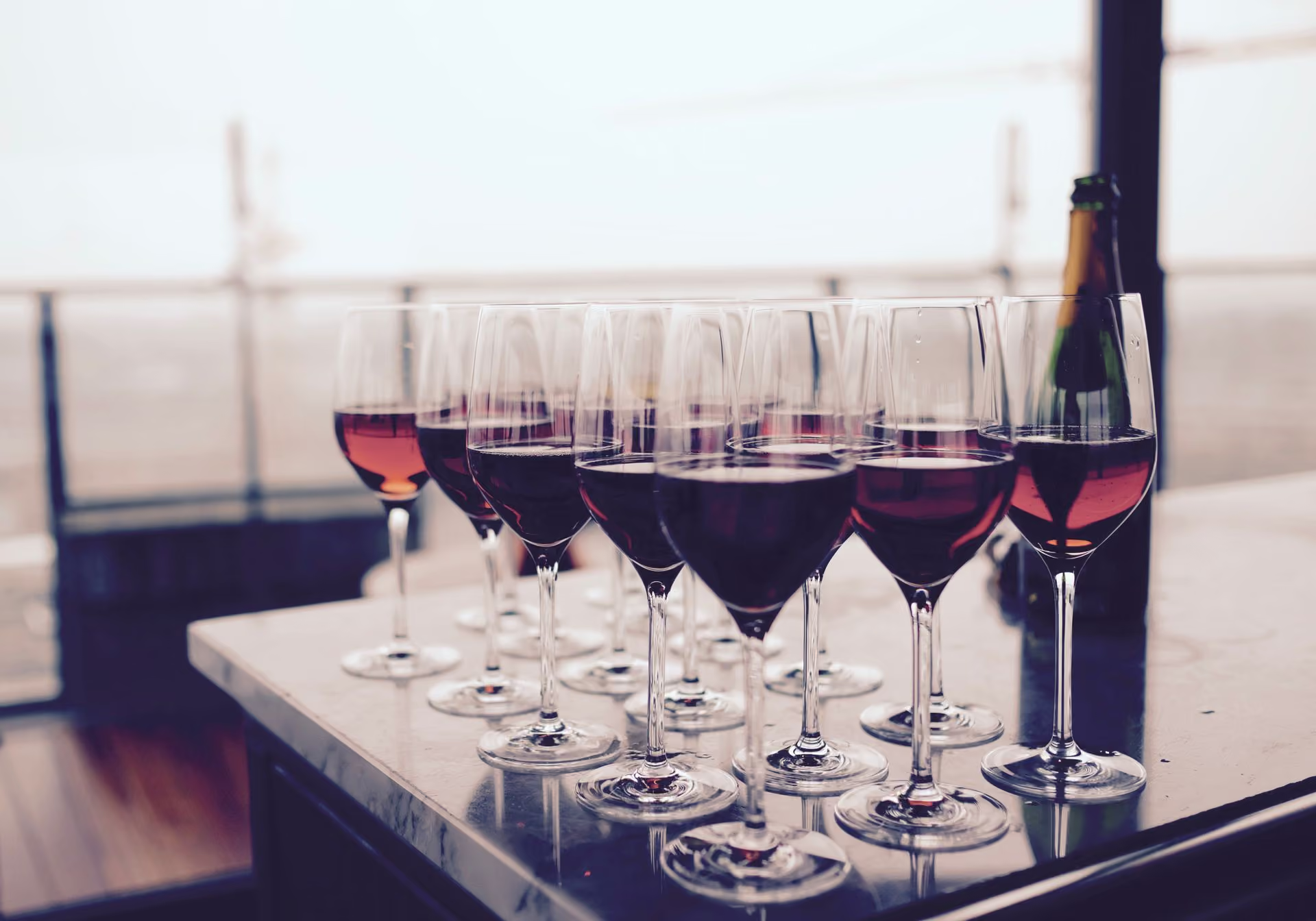
Multiple wine glasses filled with red wine arranged on a marble table with a bottle in the background.

The story behind The art of tasting

Sietze Wijma is a wine educator and founder of The Art of Tasting, delivering tasting courses using wines with added flavour compounds. His flavouring vials are used by wine educators and students worldwide. He holds an MSc in Sensory Science, the WSET Diploma and is an Advanced Cicerone®.
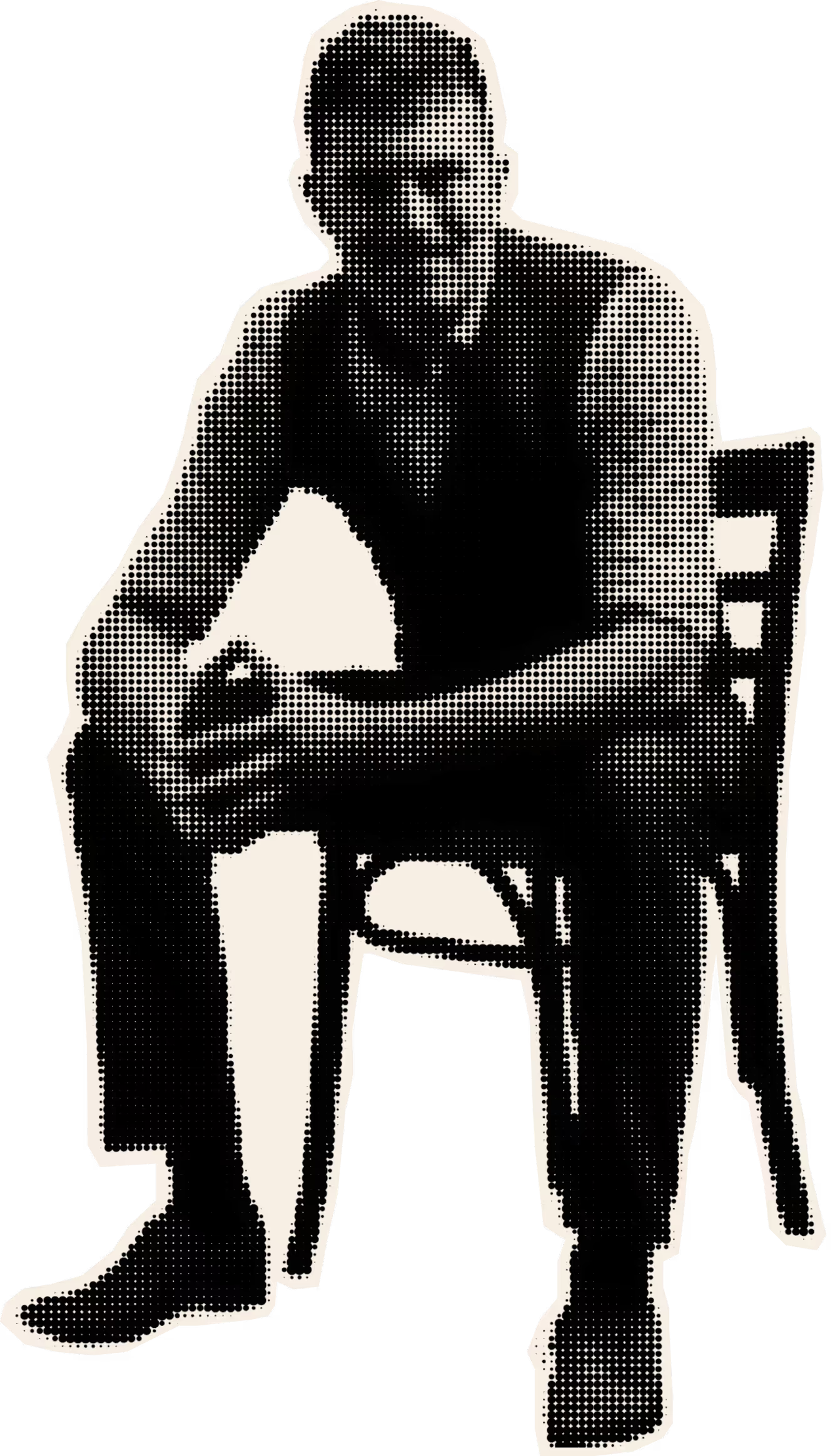
Black and white halftone image of a man sitting on a chair with hands clasped, smiling.

Frequently asked questions

No items found.