
Join our newsletter

Get monthly updates on new courses and products.

By subscribing you agree to with our Privacy Policy and provide consent to receive updates from our company.
Thank you! Your submission has been received!
Oops! Something went wrong while submitting the form.
shop
Free
shipping
Flavouring vials

Flavouring vials - wine faults

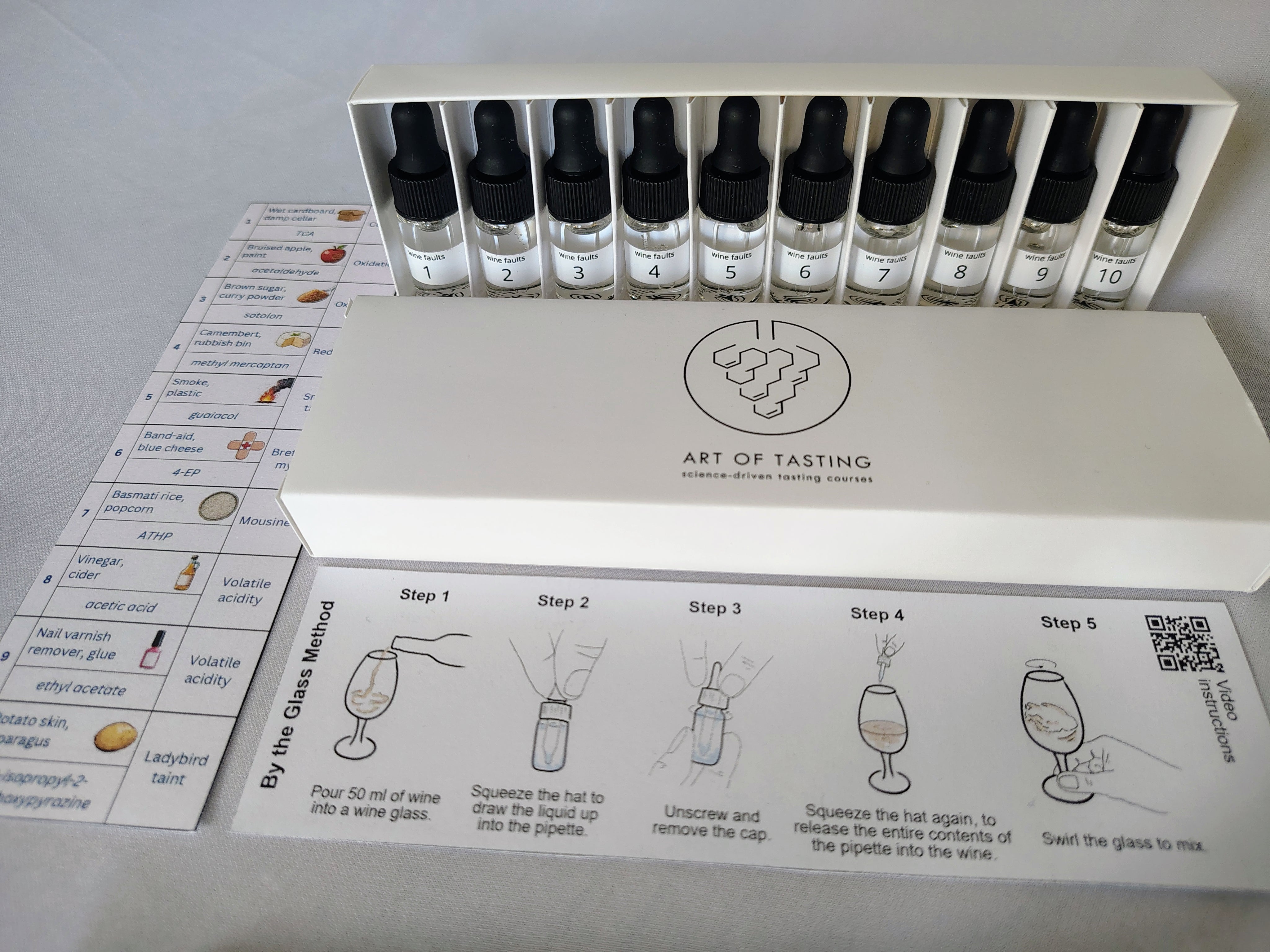
A learning tool for identifying 10 wine faults. Use this kit to make additions of flavour compounds to your own base wine.

€0,00
excl. VAT
00d : 00h : 00m : 00s
Thank you! Your submission has been received!
Oops! Something went wrong while submitting the form.

Learning to identify wine faults can be difficult from descriptions alone. Use this kit to experience common wine faults for yourself or to teach others, making it easier to recognise them in wine.

‍
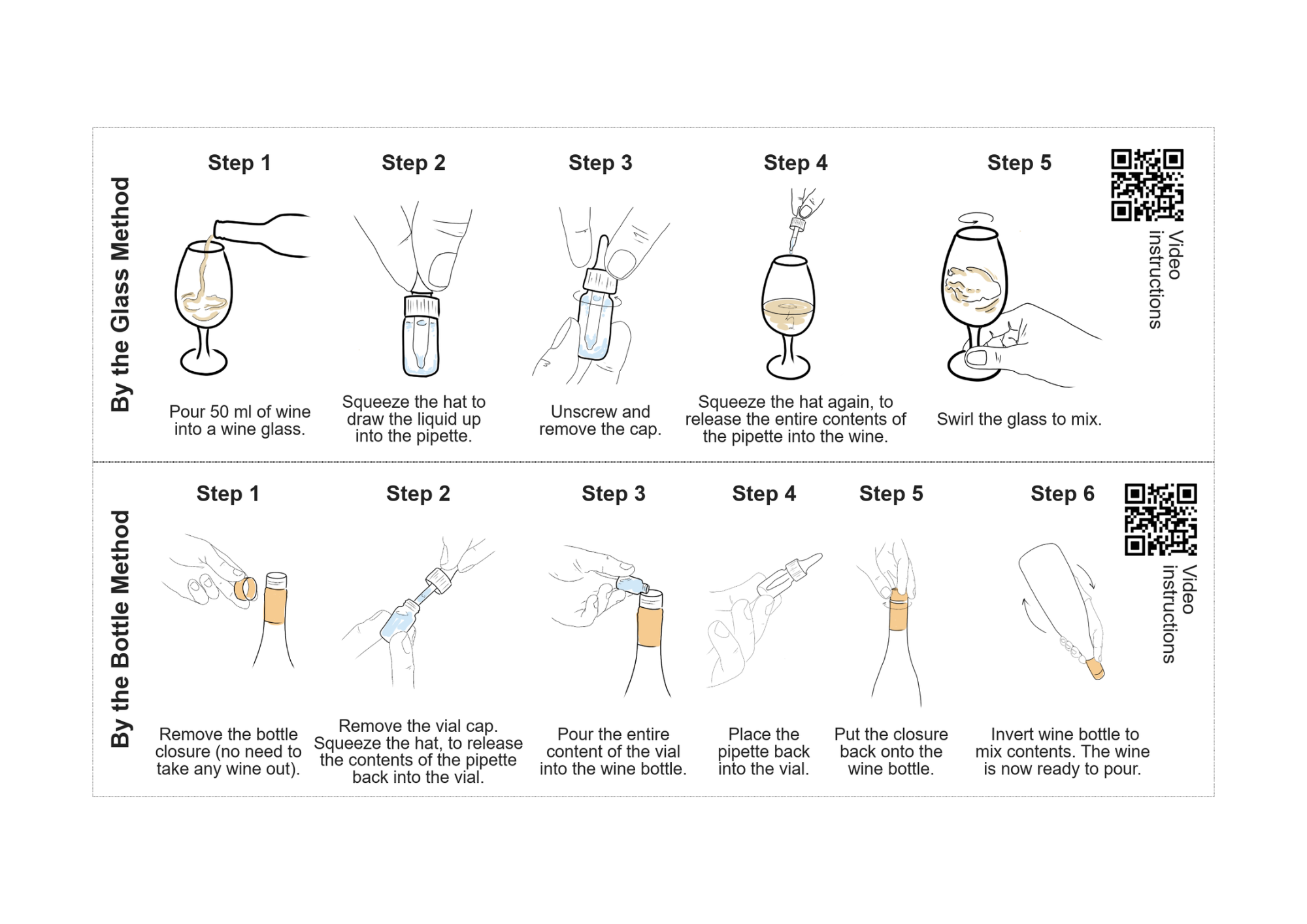
A vial can be used in two ways:

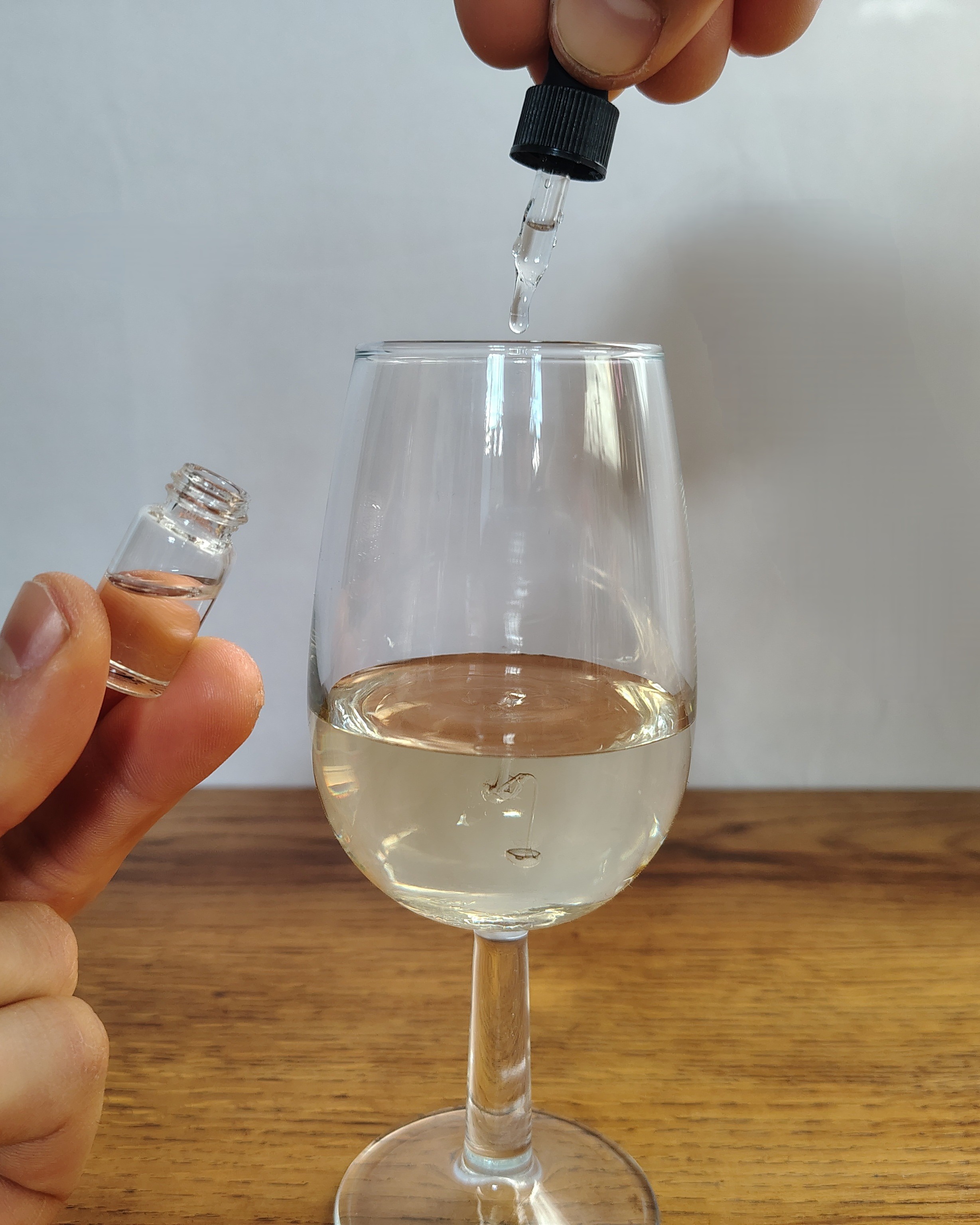
  • By the Glass: use the built-in pipette to add the compound to a 50 ml wine sample. A single vial provides enough for up to 15 additions.
  • By the Bottle: add the entire content of the vial to a 750 ml wine bottle.

After addition of the compound, smell and taste the wine sample. Try comparing it with a second wine sample without the addition. Experiencing the difference side-by-side helps you, or the people you are training, to better understand the fault and identify it in wine.

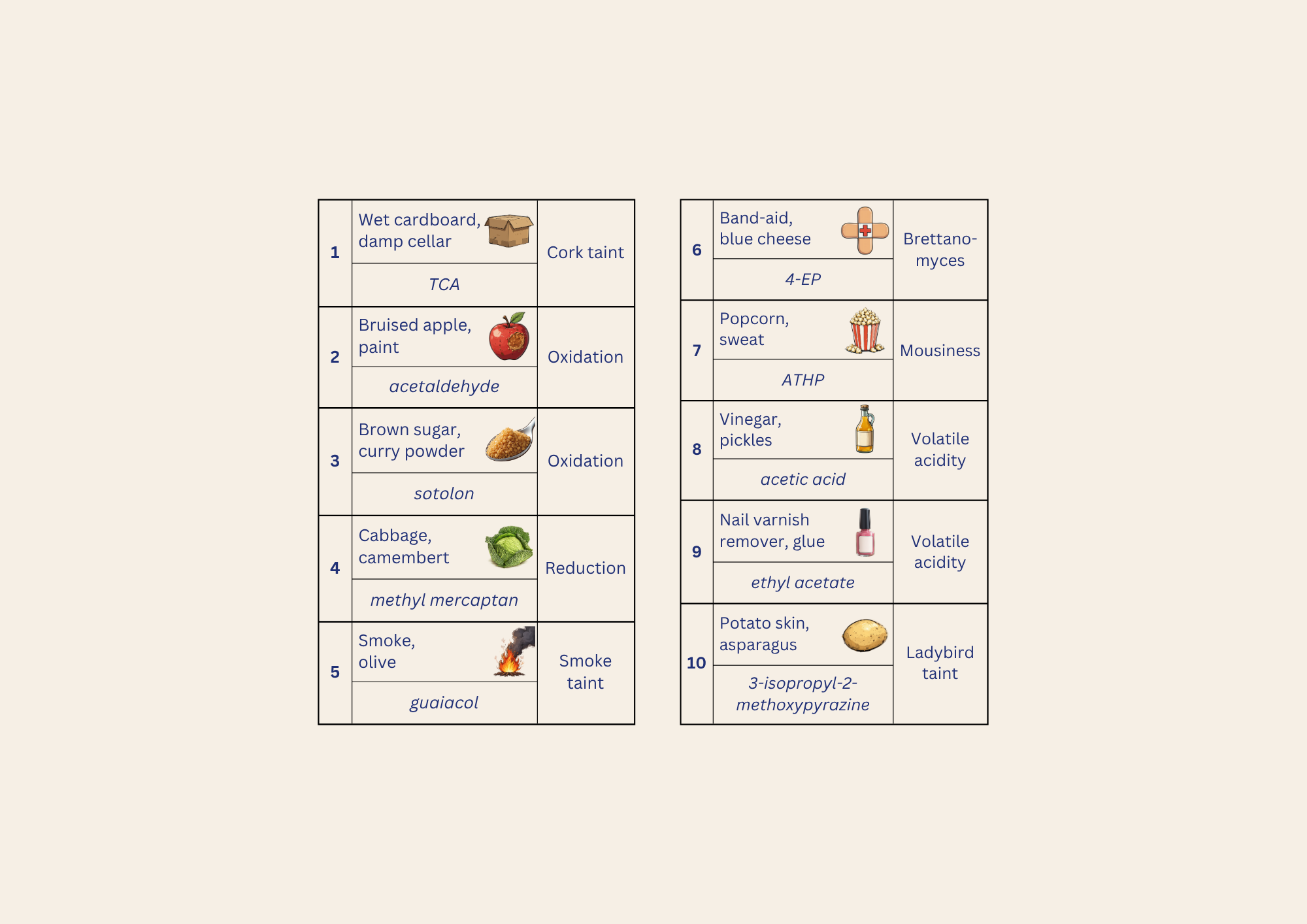
About the vials:
1
TCA
Wet cardboard, damp cellar
Cork taint
2
acetaldehyde
Bruised apple, paint
Oxidation
3
sotolon
Brown sugar, curry powder
Oxidation
4
methyl mercaptan
Cabbage, camembert
Reduction
5
guaiacol
Smoke, olives
Smoke taint
6
4-EP
Band-aid, blue cheese
Brettanomyces
7
ATHP
Popcorn, sweat
Mousiness
8
acetic acid
Vinegar, pickles
Volatile acidity
9
ethyl acetate
Nail varnish remover, glue
Volatile acidity
10
3-isopropyl-2-methoxypyrazine
Potato skin, asparagus
Ladybird taint

Frequently asked questions

Where do you ship to?

We ship the flavouring vials worldwide.

Are the flavourings safe for tasting?

After addition to wine, the wine is then safe to taste. The contents of the vials are not intended for direct consumption.

How long do the flavouring vials keep?

When kept refrigerated, they have a shelf life of 12 months, even if part of the flavouring liquid is already used up.

At what temperature should I keep the vials?

They should be kept refrigerated.

What base wine should I pick?

White wine: A neutral white wine, such as Pinot Grigio, Ugni Blanc, Soave or unoaked Chardonnay.

Red wine: a neutral red wine, such as Languedoc Merlot, Côtes du Rhône, Bardolino or an entry-level Pinot Noir.

A white wine is used for the the wine faults set, as well as the set containing positive aromas. A red wine can be used for the wine faults set, but some aromas may appear weak (especially #8 acetic acid).

The base wines do not need to be refrigerated – they can be at room temperature.

Do I need equipment to make the flavour additions?

No equipment is needed. The vials contain a built-in pipette. The compounds are sufficiently diluted to eliminate the risk of contamination.

How far in advance of the tasting can I make the flavouring additions?

Typically you make the flavour additions on the same day as the tasting. If you add the flavours to a bottle, you could add the flavours one day in advance of the tasting.

After addition of the flavouring, how long does the wine keep?

Just like any opened wine bottle, the wine will only keep for a few days.

Most flavours will remain noticeable, with the exception of wine faults #4 methyl mercaptan (reduction), as this compound volatilises easily.

Is there any learning material that comes with this product?

You can find several learning content here.

Where do you source your flavours from?

The flavour compounds are sourced from commercial vendors, laboratories and research institutions. They are not sourced from commercial sniffing kits such as Le Nez du Vin.

Are the flavours you use natural?

Some of them are of natural origin, some of them are of synthetic origin. In practical terms, this is irrelevant. Their purity is so high that the natural version cannot be discriminated from its synthetic counterpart.

No items found.